
Bianca Janse van Vuuren
Consulting · South Africa · Available remotely
Finance-first. AI-native. Build to solve.
CA(SA) and CFA charterholder. Fifteen years across DFI deal structuring, sovereign lending, and Swiss fintech compliance — now applying that financial depth to AI-native operations. I translate functional requirements into systems dev teams can build, own the product decisions that sit between the business problem and the technical solution, and deploy Claude as operational infrastructure where it actually reduces manual load. I can build from scratch when there's no team. When there is one, I make it significantly more effective.
About
Seven years structuring transactions at the Industrial Development Corporation, then five years designing sovereign financing frameworks at IFAD headquarters in Rome, with in-country deployments across Africa, the Middle East, and Central Asia.
Joining Toco and the Carbon Reserve added a different discipline. Building regulatory infrastructure for a permissioned payments platform from first principles: FINMA token classification, SO-FIT supervision, three consecutive AML/CTF audits, Danish VASP registration, one of the first MiCAR CASP applications before the group ceased operations. The compliance infrastructure held. The commercial model didn't, and the wind-down was managed in good order across three jurisdictions.
The current work is AI-native financial operations: building the systems that make businesses run with fewer manual inputs and more defensible outputs. The capability that matters is the combination — financial depth to know what an output requires and technical fluency to build the infrastructure that gets it there.
CA(SA) · CFA Charterholder · AML Specialist Diploma, VisionCompliance Geneva (blockchain-verified) · Four Anthropic Academy certifications · Vanderbilt University AI certification
Career
Structured 35+ transactions across various sectors
Seven years as a Senior Dealmaker at South Africa's primary state DFI, structuring transactions across ICT, renewable energy, automotive, and tourism — deal sizes from R1.5m to $760m, across debt, equity, mezzanine, quasi-equity, and convertible instruments. Served as IDC-appointed board director on an investee company through turnaround.
View deal sheetDesigned sovereign financing frameworks across three regions
International development finance experience at a UN agency. Designed financial covenants, disbursement frameworks, and risk-rating methodologies for sovereign financing agreements across Africa, the Middle East, and Central Asia. Deployed on in-country missions to Sudan, Egypt, Lebanon, Jordan, and Kyrgyzstan — assessing fiduciary risk and defining governance conditions inside complex institutional environments. Appointed to a fixed-term Finance Officer role at IFAD headquarters in 2021, providing portfolio-level oversight, and accredited as an IFAD Financial Management Specialist.
Designed the regulatory infrastructure for a Swiss payments platform from first principles
Toco was a blockchain-based permissioned digital payments platform on which "toco", a digital currency issued by the Carbon Reserve Foundation, was transacted. Joined as the first employee to design the regulatory infrastructure that made it operable across three jurisdictions, working alongside the dev team in a product owner role.
The starting point was a FINMA token classification analysis — the determination that toco qualified as a self-regulated Swiss payment token rather than an asset-referenced token removed the primary barrier to launch. SO-FIT membership followed, establishing regulated financial intermediary status and triggering operations. Over three years, three consecutive Grant Thornton AML/CTF audits concluded with no material adverse findings. User onboarding was architected deliberately around the Swiss CHF 1,000 threshold, keeping the compliance model defensible and commercially workable across 6,500 users. EU expansion added Danish FSA VASP registration and one of the first MiCAR CASP applications before the group ceased operations and the wind-down was managed across all three jurisdictions.
Toco did not achieve the retail adoption required to sustain operations as a transactional currency — the compliance infrastructure held, the failure was commercial. The wind-down was managed in good order across all three jurisdictions.
Key achievements
- Obtained Swiss regulatory status for the toco token
- Maintained Toco AG in good standing with FINMA, successfully concluded 3 AML/CTF audits
- Designed a Swiss-compliant onboarding process for users and merchants, working closely with the dev team as product owner
Platform walkthrough — toco app
EduQua certified, blockchain-verified — links to live verification
Designed a Moody's-style rating methodology for carbon assets
The Carbon Reserve was a Swiss non-profit foundation established to issue a carbon-backed digital currency — each toco token required to represent no less than one tonne of verified, risk-adjusted CO₂e mitigation value.
The central output of the Carbon Reserve was the Mitigation Value Assessment Framework: a proprietary rating methodology for carbon assets, structurally analogous to Moody's credit ratings. The problem it addressed — a forest credit, a biochar credit, and a landfill gas credit all nominally represent one tonne of CO₂e, but the probability of each actually delivering that tonne of mitigation varies enormously across permanence, quantification methodology, and country-level enabling environment. The framework assessed risk across four sources, produced a letter rating (AAA through D) per asset, and was published publicly to raise market-level transparency beyond the foundation's own needs.
The inaugural portfolio held 8 assets across four registries (Verra, Gold Standard, Puro Earth, and Climate Action Reserve) — 3,585 tCO₂e gross at wind-down, held in bank-grade custody on CarbonPlace.
Key achievements
- Incorporated the Carbon Reserve in terms of Swiss regulation for foundations
- Authored the Mitigation Value Assessment Framework
- Co-authored the litepaper, "From Tragedy to Triumph: Reimagining Money to Preserve the Planet", with J Pretorius
- Procured and managed the portfolio of carbon credits held by the Foundation as backing for the toco currency
Work
Claude Cowork orchestrated month-end close process
The problem
Month-end close had grown into a multi-party coordination effort across a bookkeeper, an operations team, a payment gateway, and an accounting system — with no standardised output and no automation.
The work
- Built a 9-step orchestrated month-end close running entirely inside Claude Cowork
- Custom Python reconciliation engine against the raw PayFast CSV — a 19-sheet, audit-ready Excel workbook with opening balance validation and revenue across all product lines
- AI-generated CFO commentary measured against explicit variance thresholds
- Gmail integration that monitors inbound files before the process advances
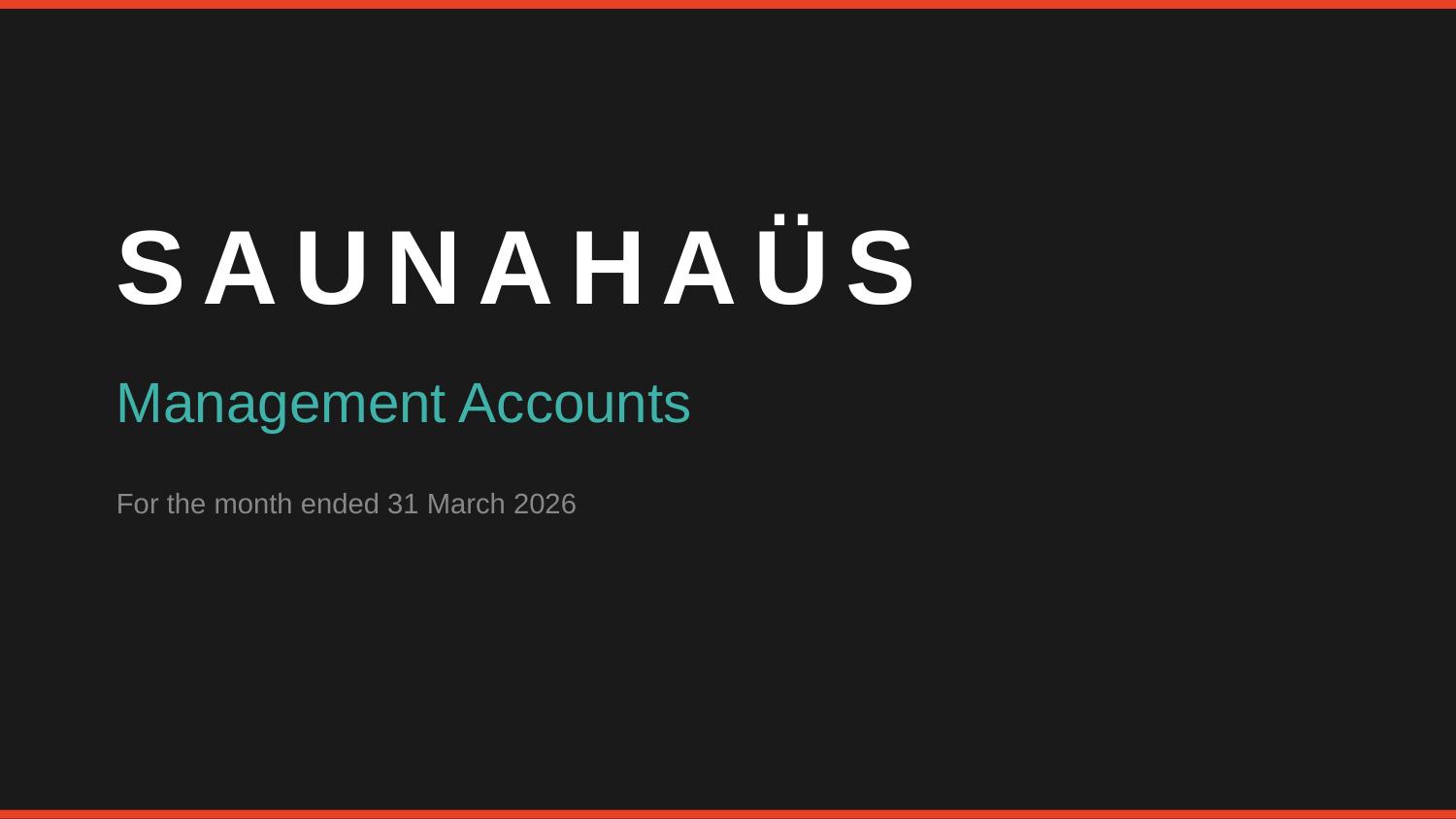
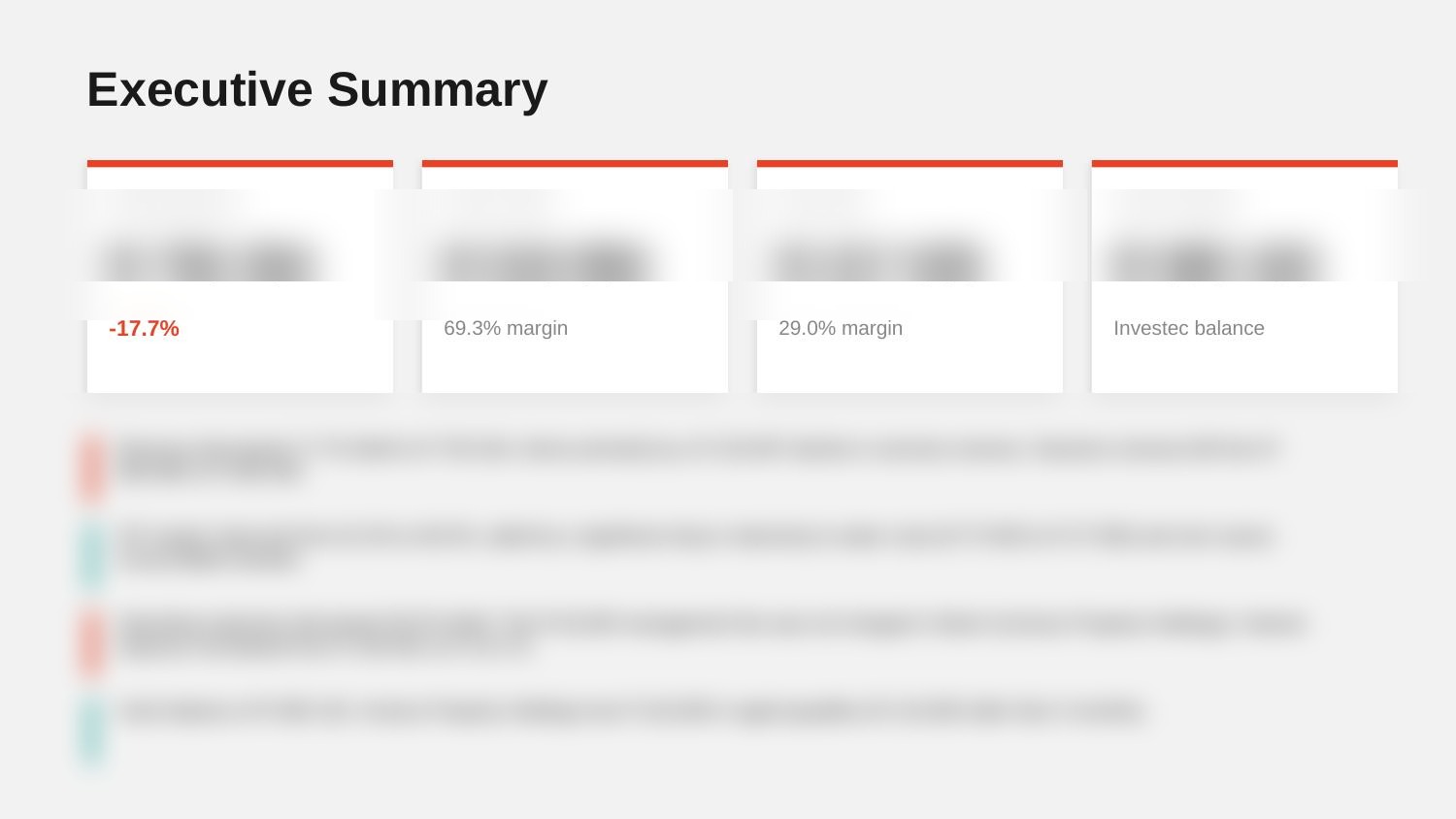
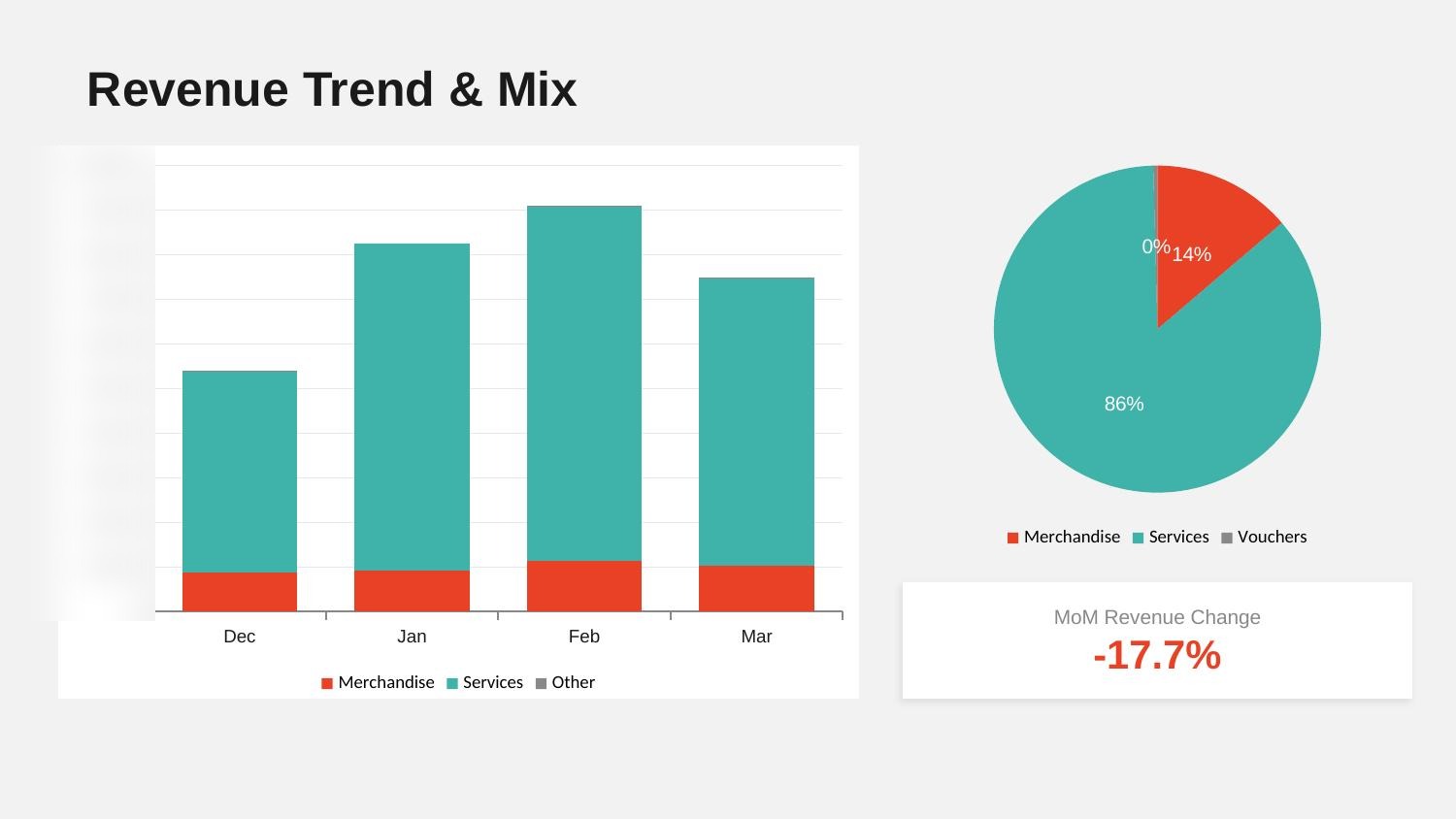
- Presentation skill that assembles a 24-slide branded management pack automatically — including a Key Actions slide surfacing aged payables, stock-outs, membership churn, and related-party transactions
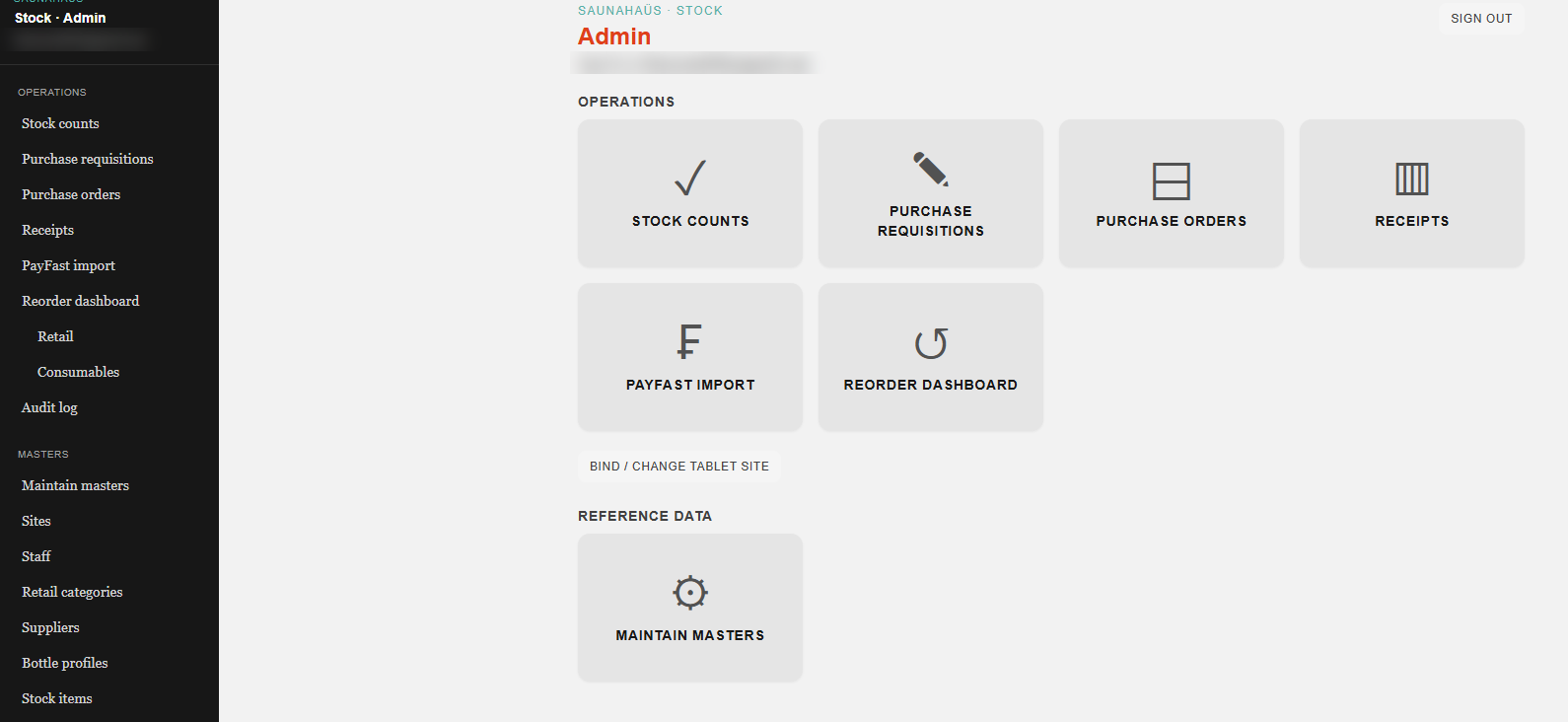
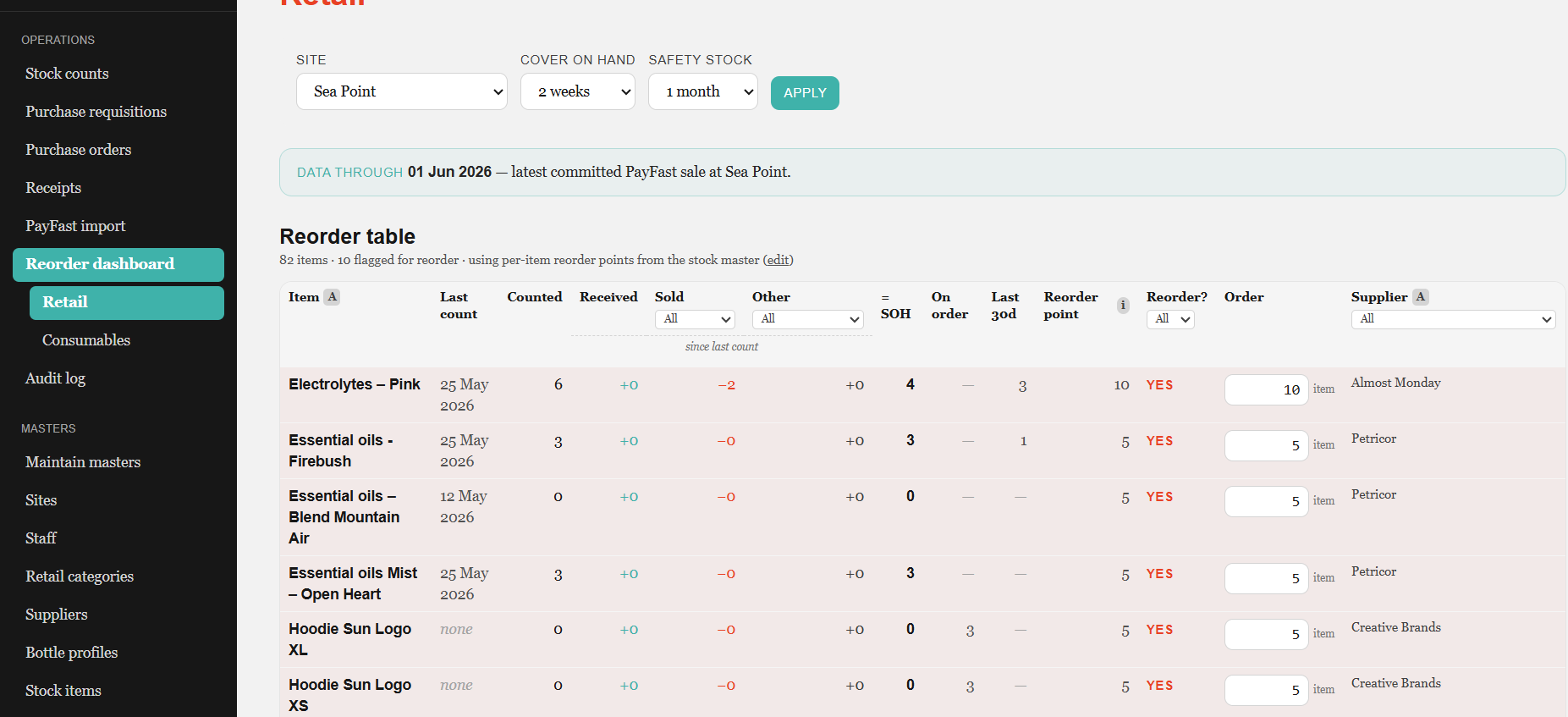
Vibe-coded stock management system
The problem
Stock was counted weekly on paper with no theoretical baseline, so variances were invisible, oils stored in part-empty bottles couldn't be tracked at all, and neither the accountant nor the operations team had a clean export or an audit trail.
The work
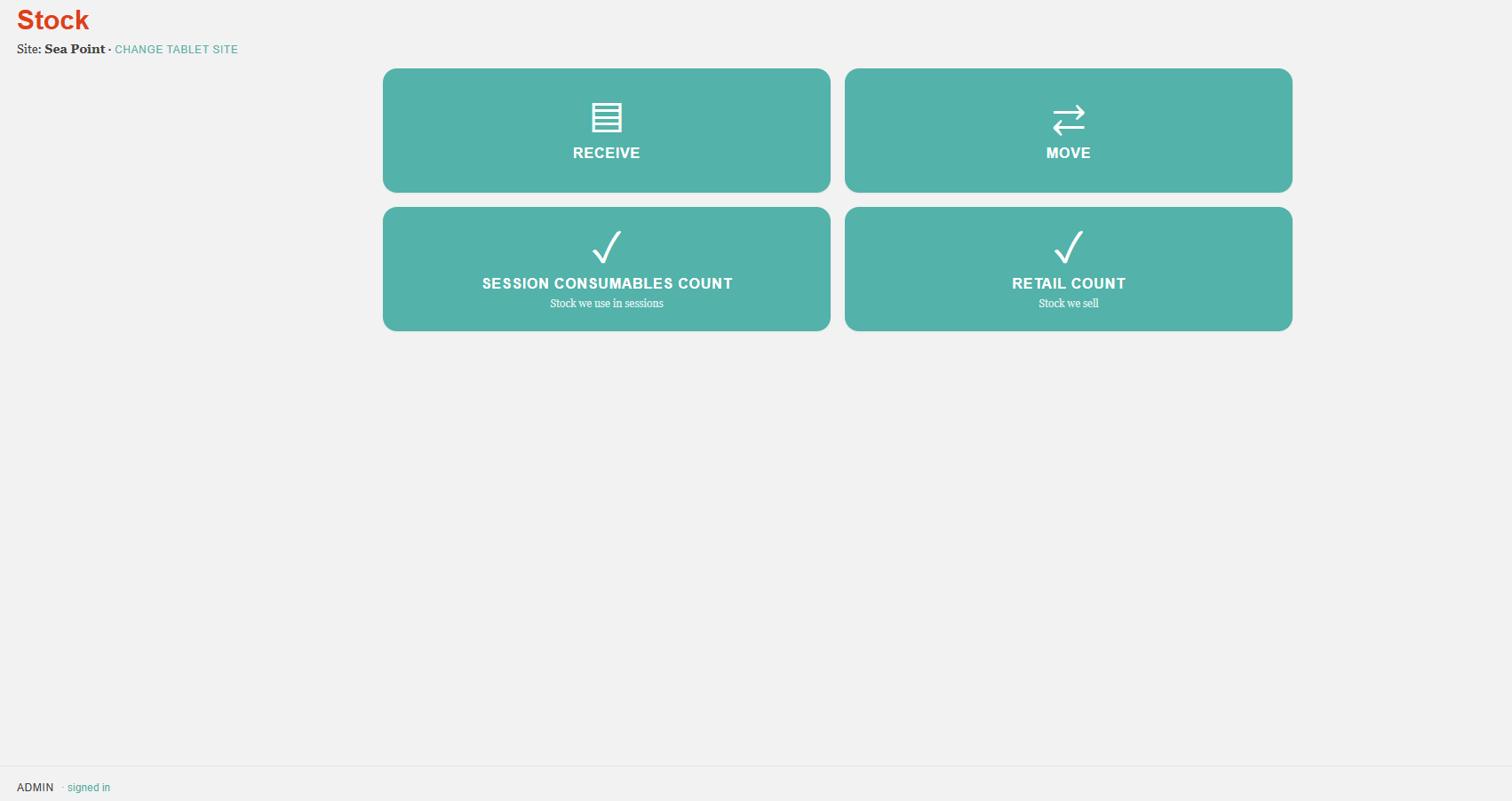
- Designed and shipped Phase 1 of a custom stock management system on Next.js 16, Supabase, and Vercel
- Count flow calculates theoretical stock-on-hand from every prior movement and surfaces variance per line as the staff member counts — not retrospectively
- Accountant now receives a Xero-compatible CSV export with per-line investigation notes in the same row
- Oils handled by extending the data model with bottle profiles (empty and full reference weights), converting grams to millilitres at count time
- Admin overrides on a locked count write a separate audited correction movement rather than mutating the original record; Sentry wired at deployment, role-aware permission gating built in from the start
- Scope and architecture defined using vibe-project-requirements — a custom Claude skill that walks through eight dimensions before any code is written, outputting REQUIREMENTS.md, CLAUDE.md, and ROADMAP.md as anchor files for every build decision. No development team
Claude Cowork orchestrated month-end fund reconciliation
The problem
A BVI-domiciled digital asset fund running five exchange sub-accounts across eight perpetual futures pairs had a manual month-end NAV process — the administrator's workbook contained structural bugs, and there was no systematic way to prove trade data was complete before locking the NAV.
The work
- Built a multi-layer financial infrastructure spanning data extraction, reconciliation, workbook engineering, and accounting automation
- PowerShell scripts hit the exchange API directly (HMAC-SHA256 signed), pulling account snapshots and full trade and ledger history across all five sub-accounts
- Each snapshot bundled with a SHA-256 hash and an RFC 3161 timestamp token — cryptographically verifiable proof of balance at a point in time
- Internal consistency engine confirms, per sub-account, that every traded symbol appears in both the trade file and the ledger, that fees cross-check to zero, and that PnL figures reconcile — using decimal arithmetic rather than floating point, to $0.01 tolerance
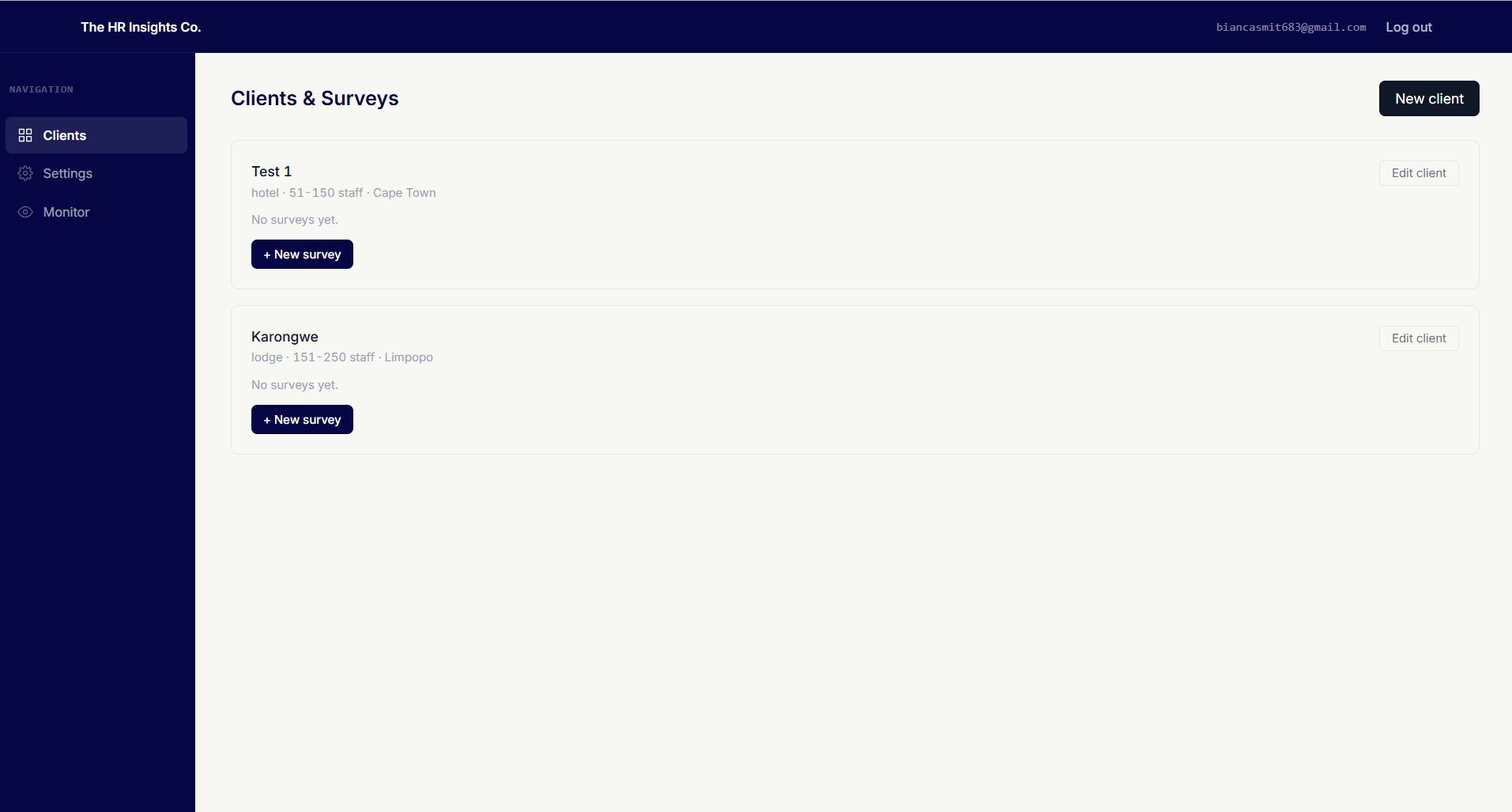
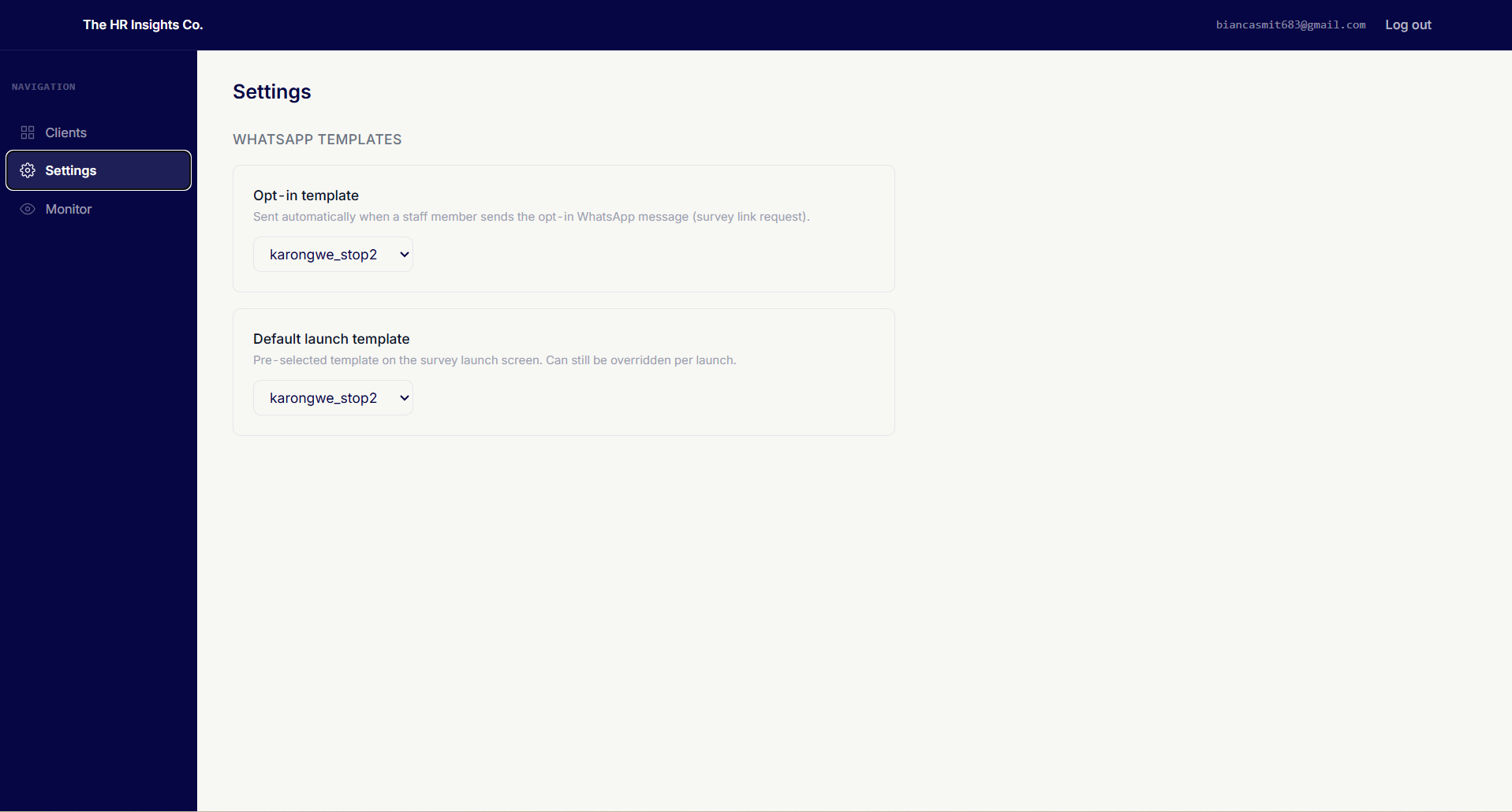
Vibe-coded Engagement Survey tool
The problem
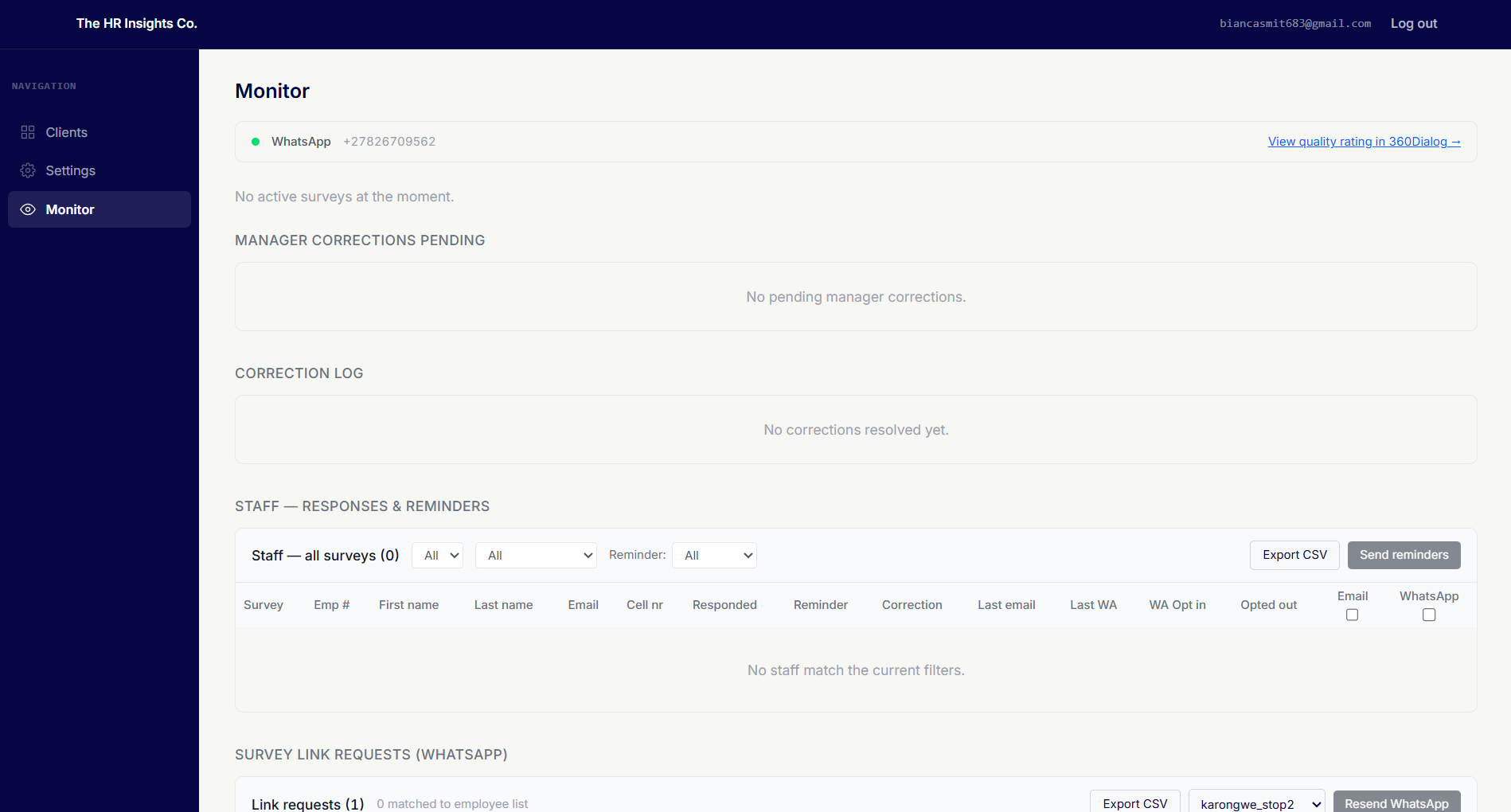
South African hospitality businesses cannot get representative engagement data because most of their staff — housekeepers, kitchen workers, game rangers, maintenance crews — have no email address. Existing survey platforms were built for office workers, so surveys reach front desk and management only, producing structurally biased data that HR and remuneration decisions can't rely on.
The work
- Designed and built a full-stack, multi-tenant survey platform on Next.js App Router (Vercel serverless) and Supabase Postgres (EU West)
- WhatsApp delivery via the 360Dialog Meta Cloud API plus email via Resend — staff get a survey link with no app, login, or email required
- Unique permanent tokens persist staff identity across survey waves; dual-channel delivery batch-controlled to respect Meta's rate limits, with full delivery-receipt capture via webhooks
- Token-gated forms with server-side validation; responses stored as raw atomic rows with segment metadata snapshotted at submission, so historical data is never contaminated by later record changes
- Built POPIA-compliant from the ground up: PII in dedicated nullable columns, irreversible single-action anonymisation logged to export_logs, server-side anonymity suppression below five responses per segment (logged to suppression_logs)
- Wildcard DNS architecture — adding a new client requires zero infrastructure changes
- First paying client: Karongwe Portfolio — survey sold, first run forthcoming
Automated Procurement Certificate data extraction and database management
The problem
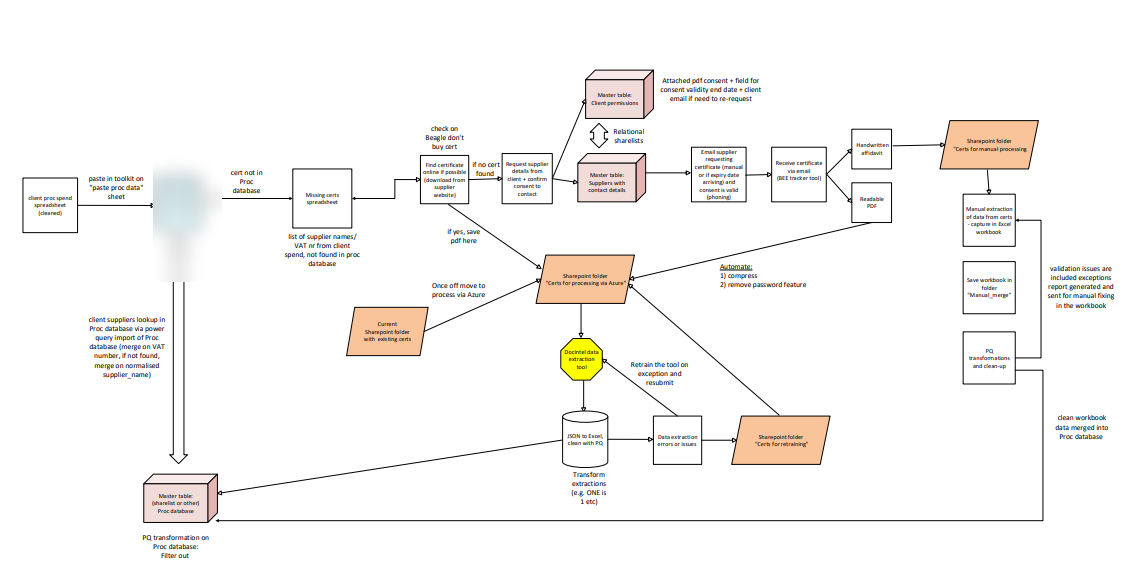
B-BBEE compliance analysis requires verifying supplier certificates against spend data. The firm's analysts were doing it by hand: hunting certificates, extracting fields from PDFs manually, and merging the results into spreadsheets that couldn't scale and couldn't be defended under audit.
The work
- Mapped the full procurement workflow to identify the waste, then built the automated core
- Python pipeline (~1,800 lines) connecting SharePoint via Microsoft Graph API
- Classifies incoming B-BBEE certificate PDFs with Azure OCR and routes three certificate types — generic, QSE, affidavit — to separately trained Azure Document Intelligence models for structured field extraction
- Outputs sync to a cumulative master workbook on SharePoint, with deduplication, failure logging, and run history
- Processes up to 500 certificates per run in parallel, replacing hours of manual analyst time per client cycle
.png)
-blurred.png)
Recent knowledge work
Framework
Claude deployment for businesses — A practitioner's framework, May 2026
Anthropic's deployment guide is a strong starting point. It is not a sufficient framework for regulated organisations. This document extends it with seven layers: waste-focused process discovery, multi-axis risk tiering, demonstration-led adoption, skills as senior knowledge capture, delegation matrix integration, audit trail design, and a Cowork-first deployment methodology.
Download frameworkEducation & Certifications
Formal education
B Com Hons, Accounting · 2002 – 2006
Professional qualifications
Training contract: KPMG
Verify
Certifications
EduQua certified · Blockchain-verified
Verify credential
All completed May 2026 unless noted
All issued Sep 2025
- Value Stream Mapping · Coursera Instructor Network · Verify
- Scrum and Kanban Frameworks Roles and Best Practices · Simplilearn · Verify
- Building an Agile Culture for Your Organization · Duke University · Verify
- Agile Accelerator: Navigating Lean Startup, Agile, and Scrum · IE Business School · Verify
Verify